
Cheek filler is a non-surgical cosmetic treatment that restores or enhances volume in the cheek area using injectable dermal fillers. These fillers are most often made from hyaluronic acid, a gel that adds structure and support beneath the skin. When placed carefully and in the correct plane, cheek filler can lift the midface, soften under-eye shadows, and create a refreshed, balanced appearance.
As we age, the bones of the midface gradually resorb, and the fat pads that support the cheeks lose volume and shift downward. The skin also becomes thinner and less elastic. Together, these changes can make the cheeks look flatter, the under-eye area more pronounced, and the lower face more heavy.
These natural changes often lead patients to ask about treatments for sagging cheeks, flattened cheeks, or a tired look. Cheek filler directly addresses the underlying volume loss that causes these concerns.
Many people search for cheek Botox, but Botox is not used to add contour or volume to the cheeks. Botox relaxes muscles, so it is helpful for movement-based lines or for the masseter muscles along the jawline, but it cannot lift or shape the cheeks.
Cheek shape and midface lift are achieved with filler. If someone wants slimmer cheeks or a more defined facial shape, masseter Botox can refine jaw width, but cheek contour itself is created through dermal fillers.
Full, well-supported cheeks create a smooth transition between the eyes and the lower face. When volume is lost, lines under the eyes can appear deeper, the midface may look hollow, and wrinkles on the upper cheeks can become more visible when smiling.
Restoring volume in the correct locations helps reinforce the midface and brings back gentle, natural-looking contours.
For older patients, cheek filler focuses on restoring structure and recreating the youthful curvature that has been lost over time.
For younger patients, the goal is often proportion and definition. Some want more pronounced cheekbones. Others want a subtle lift that enhances their natural features. You do not believe in chasing trends. You evaluate each face individually to maintain natural harmony.
Female cheeks tend to sit higher and have a wider arc, while male cheeks are naturally flatter and more subdued. Filler placement should respect these differences to maintain a natural appearance.
Good filler should be undetectable. Your goal is for patients to look refreshed and balanced, never overfilled or heavy. You avoid trends and focus on what fits the rest of the face.
Many mature patients develop flattening, sagging, or a tired appearance due to significant volume loss. For these patients, you often use a substantial hyaluronic acid filler like Voluma, RHA3, or RHA4 to restore structure. In patients with deeper volume loss or submalar hollows, biostimulatory fillers such as Radiesse or Sculptra can provide a natural-looking lift by stimulating collagen.
Younger patients may desire slightly more contour or definition along the cheekbone. The goal is to enhance natural shape without heaviness. This often involves strategic placement with firmer filler for structure and softer filler more superficially for blending.
To prevent puffiness, migration, or an overfilled look, you choose the appropriate product, place it in the correct plane, and use conservative amounts. It is always easier to add more later than to dissolve and start over.
Hyaluronic acid (HA) fillers are the most common choice for cheek enhancement. They are reversible, customizable, and excellent for structure. Products often used in the cheeks include:
These fillers provide lift and definition while maintaining a natural feel.
For patients with substantial hollowing or after significant weight loss, biostimulatory fillers such as Radiesse and Sculptra are excellent options. They stimulate collagen production over time and help rebuild deeper support.
In some cases, a firm filler is placed deep for lift, while a softer filler is used closer to the surface for a smooth and blended appearance.
You will have a consultation to discuss your goals, review your medical history, and evaluate your facial structure. Photographs are usually taken to track progress. You may be asked to avoid alcohol or certain medications beforehand to reduce bruising.
The treatment is done in your home for comfort and convenience. After cleaning the skin, a small needle or cannula is used to place filler in precise locations. You may feel pressure, but discomfort is minimal and treatment is typically well tolerated.
Mild swelling, tenderness, or bruising is common and usually resolves within a few days. Most people return to normal activities the same day or the next day. Avoid heavy exercise, facial massage, or sleeping on your face right after treatment.
Visit our Dermal Filler treatment page for more information.
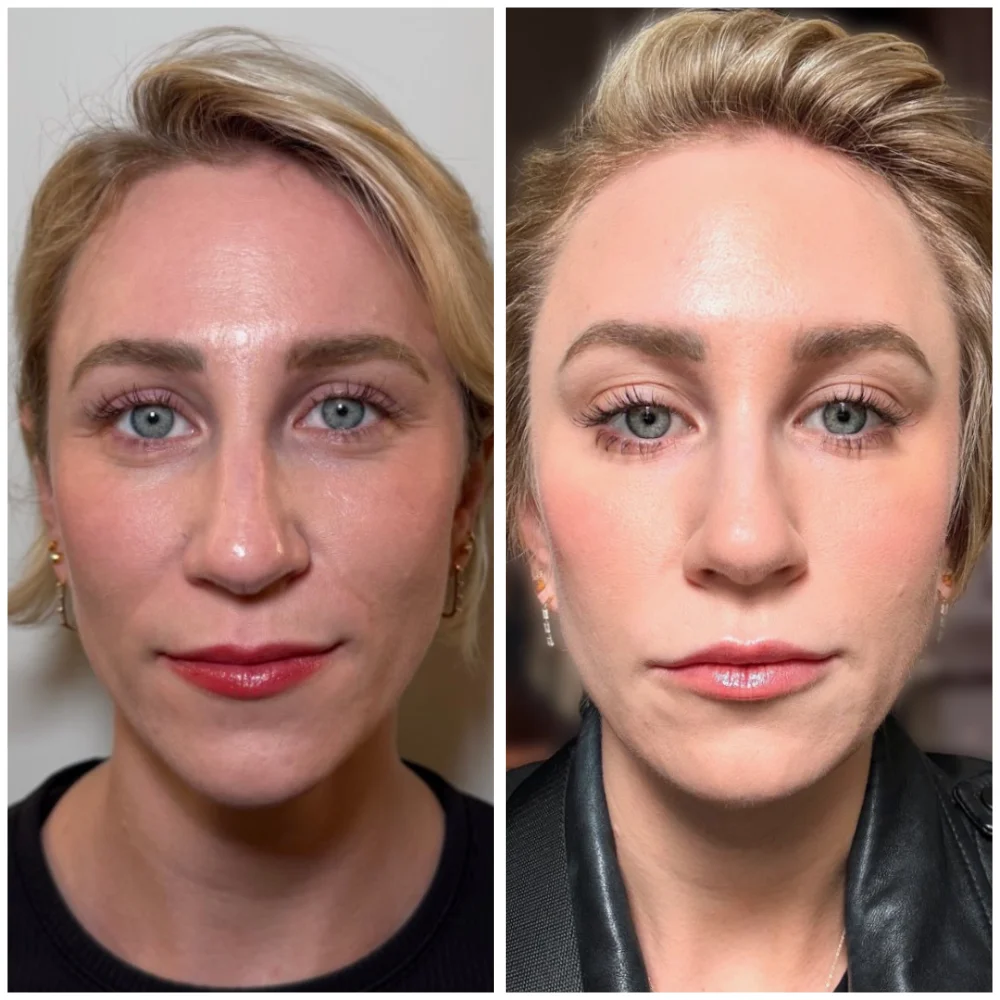
Many patients feel more like themselves again with a gentle enhancement rather than a dramatic change.
Risks may include:
Choosing an experienced physician injector reduces these risks significantly.
Most cheek fillers are made from hyaluronic acid and can be dissolved with an enzyme called hyaluronidase. This makes treatment flexible and reassures many first-time patients.
Most people return to normal activities immediately or within a day. Bruising or swelling can occur but resolves quickly.
Lift and contour are visible right away, with final results settling over several days to two weeks as swelling decreases.
Cheek filler typically lasts nine to eighteen months, depending on the type of filler used, your metabolism, and how much product was placed.
| Time After Treatment | What to Expect |
|---|---|
| Day 1 | Mild swelling or tenderness is common. |
| Days 2-4 | Swelling continues to settle. Cheeks begin looking more balanced. |
| End of Week 1 | Most people feel confident returning to events or photos. |
| Week 2 | Final results appear as filler integrates and swelling resolves. |
| Months 9-18 | Typical duration before retreatment is considered. |
Is cheek filler expensive?
Cheek filler pricing varies based on the amount needed and the type of product used. Most patients require one to two syringes for their first treatment. At Caridi Concierge, pricing reflects physician-led care, high-quality products, and in-home service.
How much should cheek fillers cost?
Most cheek filler treatments in NYC range from $800 to $1700 per session, depending on the filler and volume needed. A personalized evaluation determines the exact amount.
Are cheek fillers worth the money?
For many patients, yes. Cheek filler supports the midface, softens the under-eyes, and improves facial harmony. Small, well-placed changes can have a meaningful impact on overall appearance.
How long does cheek filler actually last?
Most hyaluronic acid cheek fillers fall within the nine to eighteen month range, but individual metabolism plays a major role.
Will my cheek filler ever go away?
Yes. Hyaluronic acid fillers naturally break down over time and are fully metabolized by the body. They can also be dissolved early if needed.
How often should cheek fillers be done?
Most patients maintain their results with treatment every twelve to eighteen months. Touch-ups are often smaller than the first session.
What is the best age for cheek fillers?
There is no universal “best age.” Younger patients often seek definition or proportion, while older patients seek to restore lost volume and support. The right time depends on your goals, not your age.
Do cheek fillers change your face?
Cheek fillers enhance your natural structure. When performed conservatively, the result is a subtle and refreshed look, not an artificial change.
Will cheek fillers lift my face?
Cheek filler can provide a gentle lifting effect by supporting the midface. For patients with sagging or flattening, this often improves overall facial balance.
How much cheek filler is needed to lift the face?
Most first-time patients need one to two syringes. Patients with more significant volume loss may require additional product for optimal lift.
Does cheek filler make your face look slimmer?
It can. By restoring cheek contour and structure, the lower face can appear more defined. In some cases, pairing cheek filler with masseter Botox gives the best slimming effect.
What filler will lift my face?
For structural support, firmer hyaluronic acid fillers like Voluma, RHA3, or RHA4 are commonly used. For deeper or more significant volume loss, biostimulatory fillers like Radiesse or Sculptra may be appropriate.
What are the disadvantages of cheek fillers?
Temporary swelling or bruising can occur. Rare risks include asymmetry or vascular complications. Choosing an experienced physician injector significantly reduces these risks.
What is the riskiest place for fillers?
The nose, glabella, and certain under-eye areas carry the highest risk due to complex vascular anatomy. Cheek filler, when performed properly, is considered safer in comparison.
Is cheek filler reversible?
Yes. Hyaluronic acid fillers can be dissolved with an enzyme called hyaluronidase if needed.

Restore volume and define contour. Lips, cheeks, chin, jawline, tear troughs, planned around proportion, never volume for its own sake.

Learn what lip filler migration is, why it happens, how to avoid it, and how Dr. Cristina Caridi can help correct it safely in NYC.

Masseter Botox in Red Hook with Dr. Caridi. Physician-led, conservative dosing, in-home appointments across Brooklyn and Manhattan.

Facials Red Hook guide: learn when a facial is enough and when chemical peels, Botox, or filler may be worth discussing in NYC.
